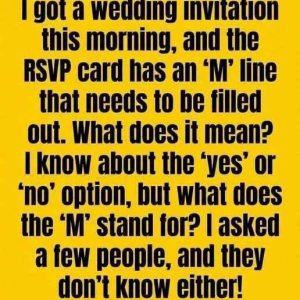
The mysterious letter M on a wedding RSVP card is actually the beginning of a traditional courtesy title. Years ago, formal invitations commonly addressed guests using titles such as Mr., Mrs., Miss, or Ms. Because all four begin with the letter M, stationery designers often printed that single letter at the beginning of a blank line. Guests were expected to complete their preferred title and then write their full name. For example, a guest named John Smith would add “r. John Smith” after the printed M, making the completed response read “Mr. John Smith.” A guest using Ms. would complete the line accordingly. What seems confusing today was once a familiar part of formal correspondence.
Interestingly, the letter has nothing to do with selecting a wedding meal or confirming whether someone is married. Its purpose is simply to identify the person responding to the invitation. When couples receive dozens or even hundreds of RSVP cards, knowing exactly who plans to attend is essential for organizing their celebration. The information helps with seating arrangements, catering, and preparing the final guest list. Traditionally, the M line offered an elegant way to collect names while maintaining the formal appearance of the invitation. It was a small detail, but one that reflected the importance placed on etiquette and presentation.
Of course, times have changed. Not everyone uses traditional titles, and some guests prefer Dr., Mx., or simply their name without any title. Modern wedding etiquette generally allows guests to respond in a way that respects their preferences while making their identity clear. If a printed M doesn’t fit your preferred title, you can write your full name clearly or adjust the line as needed. Couples planning weddings today sometimes avoid the confusion entirely by replacing the traditional M with a simple “Name” line. Others continue using it because they appreciate the elegance and history of classic wedding stationery.
There’s another wedding abbreviation worth remembering: RSVP. It comes from the French phrase Répondez, s’il vous plaît, meaning “Please respond.” When you receive an invitation requesting an RSVP, the couple wants to know whether you will attend. Even if you cannot make it, responding before the deadline is a thoughtful gesture that helps the hosts finalize their plans. And remember, writing another person’s name on the card doesn’t automatically mean they’re invited. Only guests included in the invitation should be listed unless the hosts have offered a plus-one. So the next time you see that mysterious M, you’ll know it isn’t a trick question at all. It’s simply a charming reminder of an older wedding tradition that has survived for generations.



This Post Has One Comment